
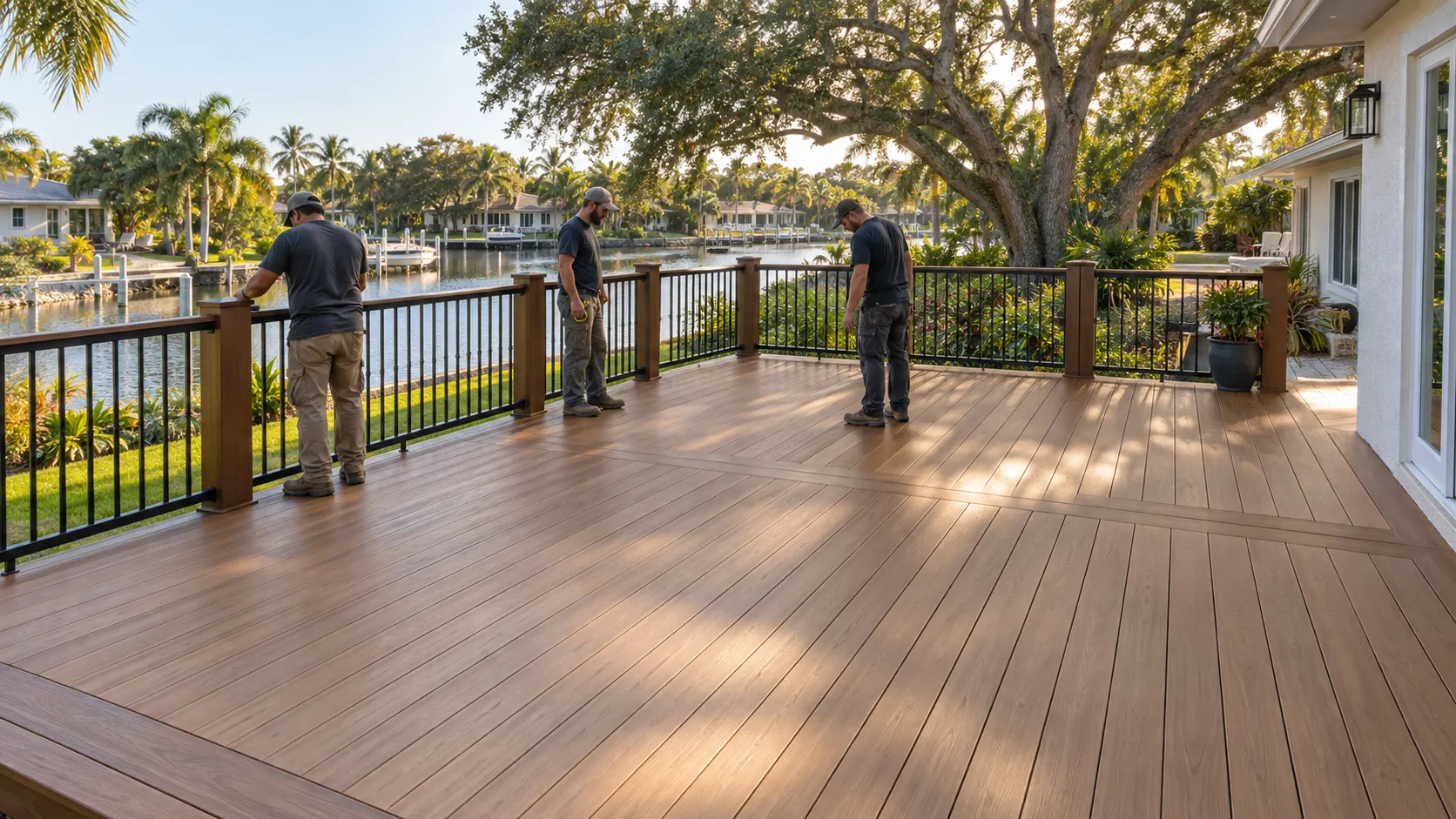
Start with the property
Direct sun, existing shade, poolside use and proximity to saltwater shape the material discussion. The same board can feel different in a shaded dining area and an exposed poolside platform. Color samples should be reviewed where the deck will sit, and the layout should leave room for the way people move through the space.
On an existing deck, evaluate the support structure separately. New boards do not restore deteriorated joists, posts or connections. A material upgrade may change the required support spacing, fastening and stair details.
Wood: natural appearance and ongoing care
Pressure-treated wood is a familiar choice for residential decks. The exact lumber, treatment and application belong in the specification, along with compatible fasteners. Hardwood offers other appearances and price points, but species and local availability need confirmation.
Wood ownership includes inspection, cleaning and an appropriate finish plan. The desired appearance and willingness to maintain it should be part of the initial choice rather than a surprise after installation.
Capped composite: compare the collection
Capped composite typically combines a wood-and-polymer core with a protective layer. Cap configuration, profiles, textures and care instructions differ among collections. Name the actual product when comparing estimates, not only the manufacturer.
The surface can reduce the staining and sealing routine associated with wood, but it still needs care. Check the current instructions for cleaning methods, compatible accessories and the intended application.
PVC: a distinct material option
PVC boards have a different composition from wood-fiber composite. Manufacturers identify certain products for moisture-prone applications, including poolside use, but product suitability still needs to be checked for the particular design.
Support spacing, board profile, fasteners and temperature-related movement remain relevant. A PVC walking surface may be supported by a wood structure, so its moisture resistance should never be treated as a description of the entire deck.
Heat and shade belong in the comparison
All decking can become hot in direct sunlight. Product comparisons and lighter colors can inform a decision, but they do not support a promise of a cool surface under all conditions. Plan shade and seating orientation alongside the boards.
Ask for complete options that include the frame, surface, rails, steps and care expectations. That comparison is more useful than selecting the lowest board price and discovering the remaining costs later.