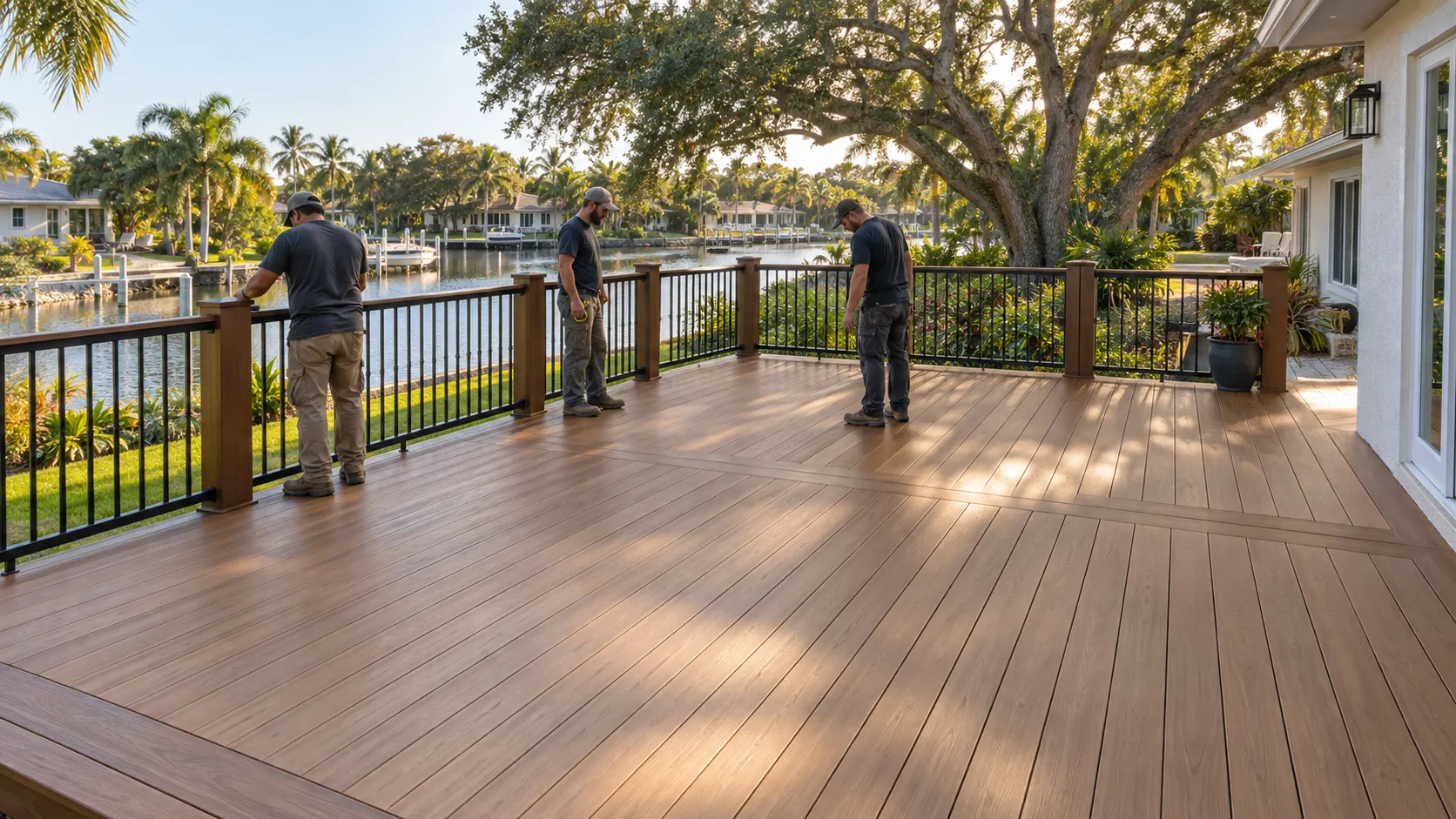
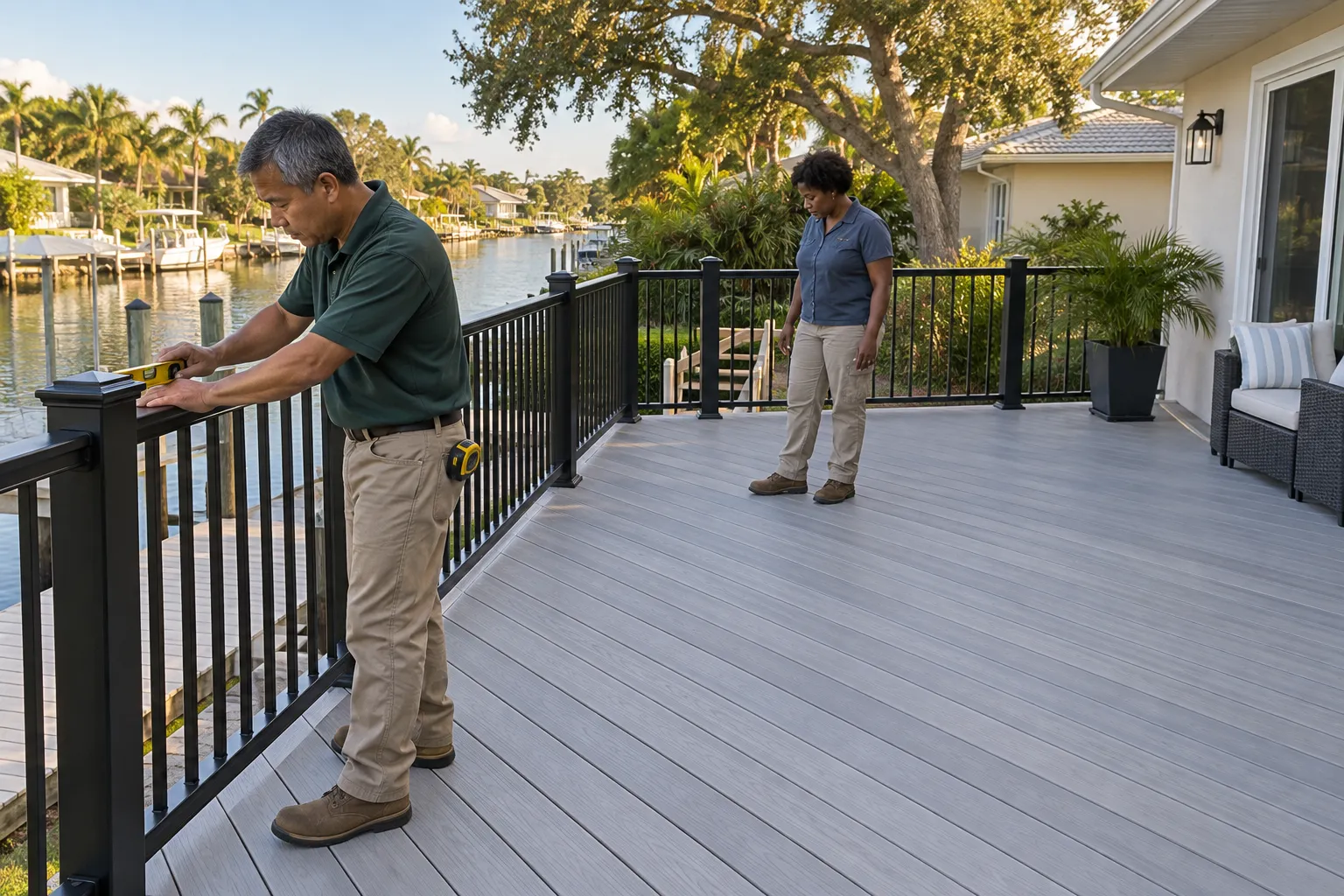
Composite & PVC Decking in St. Petersburg, FL:Material Choices for Florida Homes
St. Petersburg Deck Builders helps homeowners compare composite and PVC decking in St. Petersburg. Explore colors and board systems with less routine staining than wood. Your deck's sun exposure, cleaning needs and everyday use should guide the product choice as much as the look of a sample.
The boards need suitable framing and fasteners, including around stairs and borders. An existing frame may need changes before a new surface fits. Tell us about your deck and preferred products, then request an estimate that includes the supports and finishing details.
Compare the actual board system, its upkeep and how it suits your property.
Composite & PVC Decking services
Define the work around the condition and use of your space.
Capped composite decking
Capped composite brings a wood-and-polymer core together with a protective surface layer. The cap configuration, available profiles and manufacturer requirements vary by collection, so a brand name alone is not a complete specification. A proposal should identify the product and color along with fastening and trim details. These boards generally reduce the staining and sealing routine associated with wood, but they still need cleaning. Review the product’s instructions for spills, debris and wet areas rather than assuming all composite surfaces can be treated the same way.
PVC and capped-polymer decking
PVC decking deserves comparison where moisture exposure and upkeep are central concerns. Some manufacturers specifically identify collections for waterfront and poolside applications, but that does not make every PVC board interchangeable. Product format, supports, fasteners and temperature-related movement remain important. The selection should account for the deck’s exposure and design as well as the walking surface. For an existing deck, inspect the frame separately: the moisture performance of new boards does not change the condition of the wood structure supporting them.
The details matter
Sun, color and maintenance
Deck boards can get hot in direct sun. Color, the chosen product and shade all affect comfort. View samples outside and plan shade where bare feet and seating will be common. Cleaning needs vary by collection too. The product guide sets out suitable cleaners, washing methods and care for spills, so upkeep is clear before you choose.
A suitable existing frame may be reused through deck resurfacing, with any repairs included before the new boards go down.
A clear scope connects the first assessment to the finished deck.
Describe the exposure
Identify sun, shade, poolside use and proximity to saltwater. Establish whether this is new construction, a full rebuild or a proposed surface upgrade.
Compare complete systems
Review product collections, colors, textures, railings, fastening and care instructions. Assess compatibility with the proposed or retained framing.
Specify the installation
The final scope should name the board product and necessary structural work. Installation, fastening and finishing should follow the current instructions for that system.
What a complete proposal should cover
The specific collection and board profile are named.
The estimate includes compatible framing, fasteners and stair details.
Heat, cleaning and warranty terms are discussed without blanket promises.
Composite & PVC Decking FAQs
Clear answers before the project takes shape.
How much does installed composite or Trex decking cost?
+
Plan on $60 to $95 per square foot for an installed composite or Trex deck, including framing, fasteners and labor. The selected board collection, deck height and railing design affect the final price. Removal, special site work and additions are identified in the written scope.
Are composite and PVC the same?
+
No. They differ in material composition and product characteristics. Compare specific collections and their requirements instead of relying only on category labels.
Will composite decking stay cool in summer?
+
No deck material should be promised to stay cool in direct sun. Color, product, exposure and shade all affect comfort. All decking can become hot.
Can composite go on my existing deck frame?
+
Possibly, if the frame is sound and suitable for the chosen product after any necessary work. That requires an assessment of condition and configuration.